Showing posts with label Football. Show all posts

Friday, 11 June 2010

It's hope, that's all...


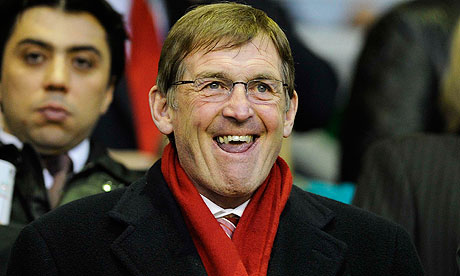
King Kenny. Hope. What's the difference? When Rafa Benitez left Liverpool last week by mutual consent, it began. Nobody likes change at the best of times, but usually a managerial change at a football club is a result of things not going too well. In that respect change is easier to accept as it offers hope. And hope is where we all fall down!


To my memory Benitez and his £6million settlement is probably the most expensive scape goat in town. I'd happily do it for half! That Liverpool finished seventh in the league, dropped out of the Champions League early and failed to reach the final of the Europa League are footballing key performance indicators and commonly used to judge the success of a football club. When they come up short as happened this season, the person accountable for the footballing side of the club is the person with whom the failure is laid. That doesn't really tell the truth, the whole truth and nothing but the truth.


That being the unstable ownership of the club, no clear strategy or direction, debt previously unknown and a changing climate in which the economics of football are played out. A club can not aimlessly pay millions of pounds in transfer fees each season regardless of other non-footballing key performance indicators and rightly so. Liverpool it was reported in the Guardian recently suffered from not heeding that principle even under David Moores and Rick Parry so it is not a new practice that should lay accusingly at the feet of the current owners. Spending within your means is valid on a personal level right through to large corporate organisations to governments and countries. That lesson can be seen wherever you turn today. 


One of the many issues that contributed to poor on-field results was that of money. How much and how to spend it. Gareth Barry's protracted non-transfer, Rick Parry's departure and Rafa's new contract are all examples of that. One of the clearest mantras a manager in any business can have is 'no surprises'. Ability means you can manage with what you have, so long as you know what you have in a timely manner. That Benitez was perceived to have spent poorly in the transfer market was not a measure of his ability but more an outcome of the lack of timeliness in agreeing what funds were available. A fact that seems lost amongst poor results and a slide down the league table. 


So how does all that relate to hope? As a manager sets out the philosophy, identity, values and beliefs of a team he or she managers, then new manages bring about revolutionary change. And if, as is often the case, the old manager left because things were bad, then revolutionary change by default is good, yes?


That leads to hope that things will be better in the future. Sometimes it is, often it isn't. Hope is currently what is fuelling media speculation and more generous journalism. Reality hasn't yet had it's chance. And when it does...?


The reality for Liverpool tempers hope. Same owners, same debt. Same players since no money is available to reshape the team. Less money as there will be no Champions League revenue. So who'd want the job? Speculation in this area is endless but misses the point. Look more closely at Benitez's departure and the clues are there.


Who sacked him (mutually of course!)? Martin Broughton, the new Chariman. And why is Broughton at the club? At the behest of the owners to sell the club. So why is someone who is trying to sell the club sacking the current manager? It would appear there is sufficient circumstantial evidence to suggest in parting with Benitez he was going about his business of selling the club.


If new owners wanted Benitez gone it could have cost £16m. New ownership and new money and Benitez probably would have not taken the £6m compromise. Benitez was also hugely powerfull: first team manager, overseer of the reserves and the academy and solely in charge of transfers. All of which have been shaped in his image. A change of owners and a change of approach and that is a large, well paid obstacle in the way!


So maybe Broughton let Benitez go to satisfy potential buyers waiting in the wings. Or maybe just to get his house in order before attracting investment. Either way it seems it was done for a purpose. Which brings us once again to the issue of hope.


If the above theory is correct, why would Liverpool appoint a manager before selling the club? Unless prospective owners have identified the person they wish to take over? A more sensible tactic would be to appoint someone in the interim. Someone to carry on the work of Benitez without the investment required in huge personnel changes. In my opinion this would be where Sammy Lee would step forward. The media are focusing on King Kenny but I am fairly confident Sammy would be the chosen one, probably mentored or supported in an executive capacity by Dalglish. Keeps things neat, tidy and cheap, and the seat warm for someone else in the future. 


Reality versus hope. Who wins? You decide!

Thursday, 19 November 2009

A defence of Thierry Henry


I'm fairly certain that this is going to be a controversial posting. Not least because a defence of cheating isn't really going to be water tight. On which note I have a couple of caveats! Firstly the YouTube clip will probably disappear from the site as soon as TFL get round to complaining so apologies if the link is broken at some point in the future. Secondly, yes it's in French (all the English ones have already gone!). A full transcript is proving hard to come by, but The Globe and Mail have some quotes here:


“I will be honest, it was a handball. But I’m not the ref,” Henry said. “I played it. The ref allowed it. That’s a question you should ask him"


"We suffered for two years, we have been having some problems with our press, our fans, with other people,” Henry said. “It would have been better to do it in another way, but as I said, I’m not the ref...If they had got through it wouldn’t have been robbery (lucky)."


"We have a lot of respect for this team,” Henry said. “We knew they play long and like a physical battle. You saw tonight that they are a very good team. I played eight years in England and I can tell you they are.”

Cheating in sport is always an emotive subject and divides opinion. It is generally unwelcome yet common place, a juxtaposition that often leads to subjective and wide ranging guidelines on what is acceptable to form. A quick search in Google for 'examples of cheating in sport' returns examples of more famous acts of cheating, with The 7 Ballsiest Sports Cheats Ever and Cheater, cheater...The worst cases of sports cheating being the most prominent search results. However these 'famous' examples mask the regular examples of cheating that occur in sport, and football in particular, every week. 


Robbie Savage was interviewed on several media outlets a couple of weeks ago insisting he would do 'whatever was necessary' to help his side (no quotes available on the internet unfortunately) in what was an uncommon admission that the people who play sport don't always play within the rules. I won't name them hear but there are at least two English International players who have a reputation for diving during games. Michael Owen 'went down easily' I think is the euphemism in order to win a penalty against Argentina at the 2002 World Cup and Sven Goran Eriksson was widely quoted by his players as having encouraged them to seek free kicks within David Beckham's range for free kicks. Neither example sending the nation into outrage. 


Much effort has gone into addressing the issue of cheating in sport. The World Anti Doping Agency is probably the most prominent and professional organisation that exists to reduce cheating in sport, but regulation is increasingly being used in an attempt to combat cheating during play. The problems encountered through using regulation is that in order to apply it, the referee or official administering the laws is in effect calling the player a cheat. The concept that a professional sports person does not cheat therefore calls into question that players professionalism and ethical standing. All on the strength of someone else's subjective interpretation of their behaviour. 


This is a particularly complex issue for an official to navigate through when players employ tactics to hide their cheating. A footballer who 'falls' over an opponents leg yet leaves their own leg trailing in order to make contact with their opponent is a particularly difficult person to discipline. At high speed and with only human judgement to aide, is it possible to decide in a split second whether the incident be a genuine foul or an act of 'simulation'? [introducing a euphemism for cheating isn't in my view making a clear statement that deception is cheating]. There isn't a retrospective science that can be applied to cheating within football that WADA benefits from in Athletics. Technology can provide more information on which a decision can be made, yet that decision is still a subjective one, even when it isn't (when is there ever a consensus on what 'obvious' is?).    


So to Thierry Henry and his self-confessed act of cheating...


I can not and do not condone cheating and my defence of Henry here will not amount to such. My defence of the player is aligned to the media hysteria that has been generated and then venum that has been directed towards him as a result. It is also a defence against the disproportional view of his action that has been taken by a large amount of stakeholders for the sport. 


There are several factors that need to be taken into consideration when viewing the incident yesterday (during the France v Ireland second leg play-off for the 2010 World Cup Final). Circumstance, timing, impact and consequence are factors that are used (rightly or wrongly) in the judgement of a person's cheating within sport. When W.G Grace was bowled first ball in an exhibition match and retorted the bowling elation with 'Young Lad, they've come to see me ball not you bowl' before retaking his place at the crease, hysteria was not forthcoming (yes a different age a different media, but...). Hysteria was not appropriate because it was an exhibition match, it was the first ball he'd received, it would have caused a major disappointment for the people who had paid to watch him bat and there was little in the way of consequence (unless you were the bowler or his team mates!).


The reaction in England to Michael Owen's penalty against Argentina? Nothing compared to the reaction given to Diego Simeone who fell to the ground after David Beckham had kicked him four year's earlier. The reasons for such a difference in feeling relate to the factors identified above. 


When a player handles the ball on his own half way line when 3v0 down, what happens? A free kick. Same player, same incident in the opposition penalty area? A free kick with perhaps a few acknowledging voices from the opposition defends, glad the dangerous play has ended. So to the same incident in that player's own penalty area? Mayhem? Hysteria? Arm-waving? Gesticulation? Suddenly the circumstance, the impact and consequences have changed. A theoretical example it may be, but one a lot of people will be able to relate to. 


Intention is another factor that has to be considered. The general view is that positive intent coupled with cheating is the worst form of cheating. I would not counter that. I would, however, refer back to the subjective nature of determining intent as an issue to consider before passing judgement. 


Thierry Henry handled the ball twice, in the opposition penalty area, in the last minute of extra time to create the goal that knocked out Ireland and sent France through. The only factor missing is intent. The most subjective factor and the most difficult to prove. General consensus deems the second handball to be deliberate. Again, so difficult to prove but even if it was a conscious act it was almost certainly not premeditated. The reaction time between Henry seeing the ball, it hitting his hand the first time to him handling the ball the second is factions of a second. How much time does it take to make a conscious decision? Is it understood what effect the first handball has upon players who then handle the ball a second time? In such a short period of time do they feel justification? Just scraping the surface of the issues that surround those two acts bring doubt. 


The second part to examine is reaction: the reaction of the player, the officials, media and fans. What should Henry have done after the goal was scored? How should he have reacted? There are no rules, no guidelines and little precedent of action other than that of which he took. To deem his actions as wrong is to apply your own personal rules and guidelines and then judge accordingly. No-one would want that to happen to them in other areas of their lives. 


The only stakeholder in that situation that does have rules that govern how they react are the officials. The officials reacted to the best of their ability and the rest, as they say...


I understand the arguments that surround cheating, that you should not do it and that no matter what mitigating arguments I put forward here, it was still cheating and as such is wrong. My defence of Thierry Henry is based around the fact that cheating is an accepted part of sport, if it wasn't it would not happen and that a player should not be vilified because his cheating came at a prominent part of an important game. 


Only if it is ever proven that it is feasible to remove cheating from sport will there ever be any real attempt to remove it. Until such time, please lay off Henry because you feel aggrieved. After all, he was dignified enough to admit it.     

Wednesday, 22 July 2009

It's not the referees that lack consistency...

I've decided to get in early this year. Listening to an interview with Ricky Ponting where he wanted to bemoan umpiring decisions during the 2nd Ashes Test at Lord's but didn't, it occurred to me that football seems to have adopted the wrong mindset when it comes to the perception of referees.

There is a perception that referees 'need to be consistent', presumably with regards to decision making in order to create an expectation that can be attained on a regular basis. This view it would seem is supported not just by fans, commentators and managers, but by referees themselves. I happen to have a few issues with this theory though!

First up it's probably important to define what is currently accepted as a definition of a referee. As usual Wikipedia has it's own view:

A referee presides over a game of association football. The referee has "full authority to enforce the Laws of the Game in connection with the match to which he has been appointed" (Law 5), and the referee's decisions regarding facts connected with play are final, so far as the result of the game is concerned.
This I think covers the 'text book' definition and I would suspect is contested by few. There is probably another angle to explore, that being the common perception of what a referee is. Although there isn't really anything to cite to backup my theory, I suspect a referee is perceived by many as being a person to ensure fair play is achieved. Whilst not a ridiculous suggestion, I think most people connected to Football expect the success rate of this to be 100%. This is where I believe the problem lies!

The expectation of a referee is probably the same as a quiz host or a mortgage broker. In these instances you feed facts into a system and the host or broker delivers a verdict. The interpretation of these facts is automated so there is no subjective judgement to be passed by a human. In reality however, they should probably be closer to a Doctor or a Judge in terms of expectation: recognised to get most decisions correct but accepted that they can not achieve 100% as they are human!

To explore this point further, taking a scientific look at referees can explain the concept. When looking at even the basic of scientific experiments, the focus is on identifying variables from a group of constants in order to evaluate performance. The same can be found in problem solving. In order to diagnose what is wrong, we often find out what has changed first and then work from there. For example when a car breaks down because of a puncture, the puncture is the only variable that changed from when the car was working fine. With a referee, often the only constant when evaluating their job, decisions, performance etc. is the referee himself. Everything else is a variable.

Using a simple example to compare two 'similar' decisions, firstly look for the variables: if we look at two decisions over two games then these will include the date, time, location, probably both teams, maybe a different competition. These are just some of the more obvious variables. Then there are more obscure ones that a based on human behaviour: history between two teams, between teams and referee, previous incidents in press/media, recent criticisms of other referees etc. All of these will have a bearing on how the referee feels, thinks and ultimately acts. A late clip by the full back on the winger early in the game may go unpunished in the first game, receiving just a cautionary word from the referee, yet may be punished with a yellow card in the next game. Why? Unfortunately a variety of reasons! The referee may have been criticised for his decision in the previous game, he may be trying to assert his authority early on in the second game, the referee may perceive the full back deliberately clipped the winger in the second game but not the first.

There are two points that are important from the example above: referees are human and as such can not guarantee that subjective thinking will not come into their decision making and secondly, that only the referee has all the information available to him when making a decision. Commentators and managers can disagree but the only person who has all the information to make a decision is the referee.

So based on the theory and examples above, is it right to lay such expectations on referees? Would the same be made in other professions? There are a few similarities between referees and professions such as judges. Both make decisions that include an element of subjective thought. Both have a recognised appeal process to accommodate human error and mistakes being made, yet judges in general are not a vilified breed.

As an argument against referees, there will undoubtedly be incidents that referees should be expected to make correct decisions on. Black and White issues that take little subjective interpretation. In these instances it is probably fair to ask for a level of consistency and by their own admission, a lot of referees do acknowledge obvious mistakes. But if we are not to expect them to be able to interpret every situation correctly and make the appropriate decision, then what expectation should we have for referees?

Consistency should be found with our approach to how we view referees. More account should be given to the fact that a referee can not always produce consistent decision making due to the wide range of variables involved from one decision to the next. If this primary notion was accepted across the sport it would make a huge difference in the way referees are treated and accounted for. To cite Ricky Ponting, it is acceptable for players/managers and fans to disagree with the decisions taken by referees but they must be accepted as part of the game. Accepted in the same way that a player being injured during the match or sent off for an incident on which all agree was warranted are accepted by all parties as justified in altering the course of the game.

In addition to this there is also merit in the old adage that the decisions even themselves out across a season. Although I do not have any statistics to prove the theory, my hypothesis would be that contested decisions for and against a team even out during the course of the season.

Again to Ricky Ponting and rather than find excuses from questionable umpiring he chose to acknowledge the weaknesses of his side's play as reasons for their failure to win the match. Similarities could also be found in football. How many times has a manager blamed a referee for not awarding a penalty as justification for his side's inability to win the game, yet neglected to acknowledge the abundance of chances his strikers missed in open play? If a player is sent off then again the referee is blamed. Who questions why the player got themselves into that situation in the first place?

To summarise, consistency ought to be sort in the way everyone associated with football approaches the role of a referee in football. They should not be expected to find a level of consistency that exceeds the subjective capacity of their decision making. They should be expected to deliver the best decisions they can, and that erroneous decisions will even themselves out over the longer duration.

A referee is an easy scape goat for those who do not have the ability to question themselves when it comes to failure. A change in mind set to accept the limitations of a referee when evaluating the outcome of a game will go along way to improving the perception of referees and the quality of the decisions they give.

Friday, 17 April 2009

Why Football is a Business and Fans aren't important


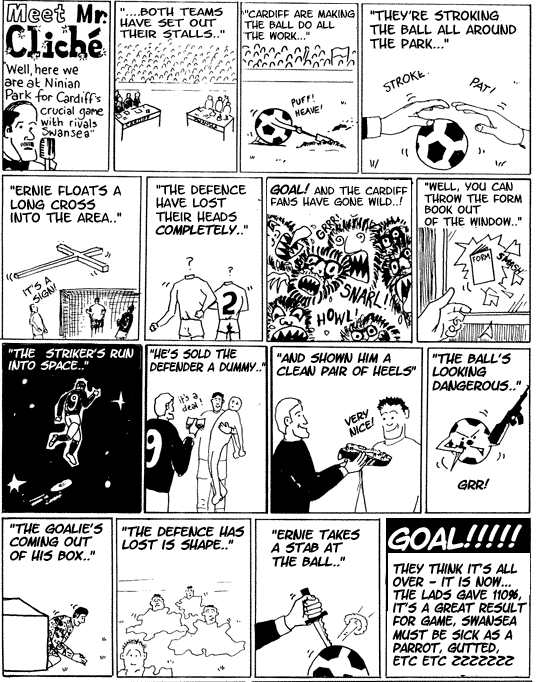
There's a lot to be said for football cliches. Or is it that there's lots of football cliches said? Either way they form an integral part of our game. They are part and parcel in the game of two halves, the funny old game that often leaves you at sixes and sevens early doors, when there's no easy games because they're all to play for, even if you do take them one game at a time! Whole passages of play can be described in cliches (see here, for example) and the atypical pre-match interview does not sound like this!

So why are cliches so important in football (and to a certain extent, sport in general) and how do they relate to the commercial aspect of the sport? There are many definitions of cliche, the one that lends itself to football probably being: [OK, 'lends itself' will be the last intentional cliche]

cliched - repeated regularly without thought or originality; "ready-made phrases"
wordnet.princeton.edu/perl/webwn

This definition is relevant to football for it serves two purposes: it epitomises the closed-shop, comfortable and familiar aspect that a sporting mentality brings; a world in which you can become accepted and belong by adhering to a simple code, and with its ready-made phrases it simultaneously sticks two fingers up at the business and media obligations to the sport. Anyone can play the part by learning the lines (again reference the template example above). 


Football cliches serve to minimise the importance of the business role, to diminish the contribution of finance and maintain the perception that sporting principles rule, OK? As has been proved year on year since the Premierships inception, that is no longer the case. The power balance within football has been shifting for the past 17 years and is now firmly held in the corporate world's favour. Naturally such a change will encounter resistance and even denial, especially when encountered during the period of change. Fans are no longer the most important institution in footballer. However much it is disliked, the facts to support such a claim exist. 

The average ticket at Liverpool this season costs approximately £38 (see LFC website). For premiership games, an average gate of 44,000 over the 19 home games brings a fan-based revenue of £31,768,000 (2006 results for Liverpool show £25,219,000). Add to that merchandise revenues (Liverpool made £16,322,000 in 2006) and that makes a fan-based financial contribution of approximately £47,000,000. Consider the corporate revenue streams available to football clubs and the picture changes slightly. In 2004/5 Chelsea earned £30,000,000 from Sky by winning the premiership (source: telegraph). For the 2008/9 season the winner will collect £50,000,000 from Sky whilst the bottom club will collect £25,000,000 (In 2005/6 Liverpool collected £29,643,000 according to their annual report). Even under the older Sky deal, that's a big income. Move into the world of corporate sponsorship and the numbers are there again. To continue the Liverpool example, sponsorship revenue in 2006 was £17,904, seemingly a poor return attributed to a dispute with Reebok (the kit is now manufactured by Adidas) and 9% lower than the previous season when they won the Champions League. Consider for the 2009/10 season Liverpool are planning to increase this amount to £60,000,000 when renewing their agreement with Carlsberg (source: IMScouting) and again the picture begins to form more clearly in the business world's favour. Finally add in £22,000,000 of shareholdings for Liverpool (source: 2006 annual report) to complete the picture. 

In summary (and by no means the result of any qualified analysis!) sources of finance for Liverpool can be attributed as the following:

Fan-based: £47,000,000
Corporate: £132,000,000 (assuming they win the League and gain the maximum sponsorship deal with Carlsberg).

By no means do I advocate that football is all about money. It's not far wide of the mark, however. If you were to view Liverpool as a business, your major stakeholders are without doubt Carlsberg, then Sky, then the fans followed by the Shareholders. But in truth the shareholders have a large stake in the company as they own it, so that leave the fan base out in the cold. 


The argument is based on the assumption that money matters, and it does! From a fans perspective they need money coming into the club to strengthen the team, ensure ticket prices remain reasonable and allow the club to develop, progress and ultimately improve on the pitch [is that a football cliche?]. It is important to note that out of a combined income of £179,000,000 the fan-based income weighs in at a significant 26%. It's this 26% that affords the cliched-indulgence that fans are the most important aspect of a club. Another factor that furthers this perception is that the fans are also the club's (and more importantly their benefactor's) customers. As a customer to Liverpool football club, purchasing tickets and merchandise you are afforded a certain importance. As a captive market for sponsors and other third parties this importance is furthered yet still. 

In fact the entire premise of the fact that football fans aren't important to clubs anymore stems from this. If no fans turned up to Anfield all season, Liverpool would lose that revenue. However Sky could still show their games, advertise and promote their own products and people would still watch. So Liverpool's value to Sky remains despite Liverpool fans attendance at games. Liverpool's relationship with their fans is a necessity of Liverpool's relationship with Sky. A similar scene can be found with Carlsberg (to a lesser extent).   

If it is accepted that money is now the most important factor in football, and that this has changed the dynamic between clubs and fans, then why has money and thus business, become so important? Ironically in some ways it's because of the fans! Take any aspect of a Premiership football match where money is concerned, and the entity that ultimately funds it is the fan. How many times is a new player or stadium funded (at least in part) with ticket price increases? Why does Carlsberg pay Liverpool so much money? So it can persuade the Liverpool fan to drink Carlsberg. And Sky? So football fans in general will buy Sky to watch the matches. Convinced? Take it a stage further. How do Sky find the money to fund football? Companies pay to advertise during their TV programmes. Why? To convince Sky's viewers to buy their products and services. And Sky's viewers are......!

Football is a business. Simple. Further to that, football has become a business to make money out of fans. In economic terms a club is merely an entity with much-valued assets: fans. So how do the football businesses keep their assets? They indulge the cliched lifestyle of a football fan and ensure they remain loyal to the club through marketing the club attractively and promoting fans' core values. Football clubs want loyal fans so they can facilitate other businesses direct marketing to them. Everything else, unfortunately, is a side-show. 

To determine whether this shift to corporate-dom is good or bad is difficult. If on balance a football fan is still relatively happy, is that OK? If money is flowing in football than the non-financial aspects of football will remain healthy as a result. At least they should. As a pure concept though, money in football will mean the sport can no longer be a sport, and that for many is a problem. For the vast majority of people they will learn to accept a compromise. Where the situation often gets complicated, is when the football fan feels aggrieved for a particular reason and cites the corporate world as source of that grievance. 

This can be seen recently with Setanta's coverage of the England internationals. The debate in the Guardian summed the conflict up quite well. To summarise my contribution to that blog, Setanta took the blame from most football fans and I pointed out that this took focus away from the FA and the government's decision to make money through the coverage as opposed to focusing on the wishes, wants and needs of the fans. I argued that English football needed a Setanta-type figure to challenge Sky's monopoly on TV rights, and that this was merely an example of how the concept was right, the execution not so. Finally I concluded with:

Either change the current perception that it's the fans that are the biggest stakeholder in football in the UK (to a realisation that money talks!) or change the structure of TV rights to ensure the fans can watch football at affordable prices.

Now whose going to volunteer for that? The FA, the government, Media????

The decision point is clear: money talks or put fans first. I doubt the latter can ever win.